
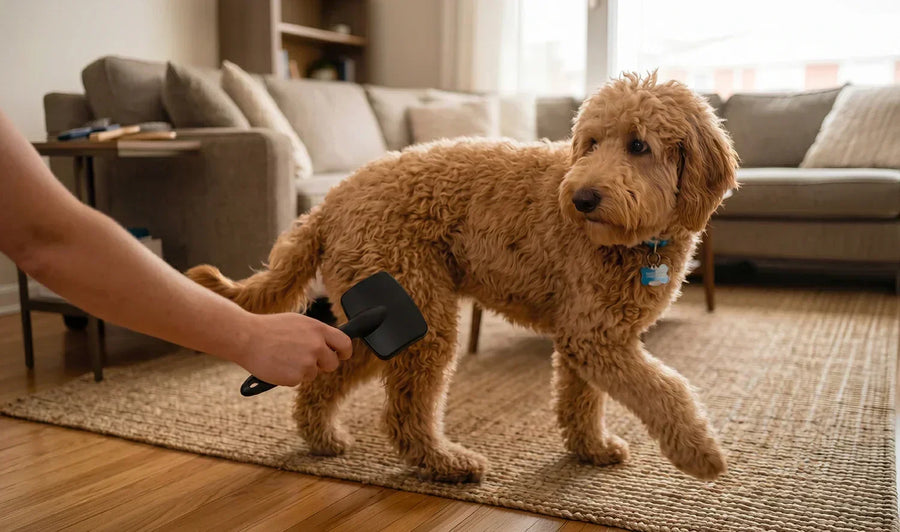

You pick up the brush. Your Doodle clocks it from across the room and immediately finds somewhere else to be.
Under the table. Behind the sofa. Out of the door if they can manage it.
It's frustrating. It's time-consuming. And if it goes on long enough, brushing simply stops happening — which leads to mats, expensive grooming bills, and a dog that's increasingly uncomfortable. If you've ever found yourself typing "why does my dog run away from the brush?" late at night, this one's for you.
The good news is that a dog running from the brush is almost always running from a specific thing — not brushing in general. And once you understand what that thing is, you can fix it.
Reason 1: Brushing Has Been Uncomfortable Before
This is the most common reason by a significant margin.
If your Doodle has ever experienced brushing that dragged and pulled on tangles, or a brush that scratched against the skin — whether from a rigid tool, an existing mat, or technique that was too rough — they've remembered it. Dogs have excellent associative memory for negative experiences. A dog that had a bad brushing experience three months ago may still be reacting to that memory today.
What to do:
Swap your brush for a flexible head slicker with rounded, polished pins. The flexible head absorbs resistance instead of dragging, and the difference in how it feels on a curly coat is significant. Then spend a week rebuilding the association from scratch — treats and calm contact before you ever brush a stroke. See our guide to rebuilding brushing tolerance for the full process.
Reason 2: There Are Mats Causing Discomfort
A dog that runs from brushing in general, but particularly flinches or reacts in specific spots — behind the ears, along the collar line, on the legs or tail, or in the armpits — is almost certainly reacting to mats in those areas.
When a mat is present, even light brushing pressure tugs against the skin. The dog isn't escaping the brush — they're escaping the discomfort the mat causes when touched. The mat is the problem, not the brushing behaviour.
What to do:
Check the five mat hotspots with your fingers before every session. If you find hardness or tightness, deal with the mat separately — work it out gently with fingers and detangling spray, in short sessions, before doing any general brushing.
Reason 3: The Sessions Are Too Long
Most dogs have a tolerance window for being held still and handled. When that window closes, they want to leave — and if you keep going anyway, they start finding ways to escape before you even start.
If your grooming sessions regularly run to 20, 30, or 40 minutes, your dog may simply be anticipating a long, stressful experience. They're running from the duration, not the brush itself.
What to do:
Shorten sessions dramatically. Five minutes, done while your dog is still calm. Over time, as your dog stops anticipating a marathon, their tolerance builds — and paradoxically, you can brush for longer because they're no longer stressed before you start.
Reason 4: They Were Never Taught to Accept It
Grooming tolerance isn't instinctive. It's trained. A dog that was never introduced to brushing gradually and positively — especially in puppyhood — simply has no framework for accepting it calmly.
This isn't a character flaw, and it isn't your fault if nobody told you. But it does mean you're now teaching an adult dog something they should have learned as a puppy — which is harder, but absolutely possible.
What to do:
Go back to basics. Treat the brush as a novel object again. Build calm associations before you attempt to brush. Use very short sessions. Be patient — an adult dog with months of avoidance history will take longer to retrain than a puppy, but the process is the same.
Reason 5: The Environment Is Wrong
Dogs pick up on your energy and the context of what you're doing. If brushing always happens when you're stressed, rushing, or frustrated — your dog will anticipate that emotional state and want to escape it.
Similarly, if grooming always happens on a surface the dog doesn't like (a slippery table, an uncomfortable position), the physical discomfort becomes part of the association.
What to do:
Try brushing on the floor, with your dog resting against you in a natural position. Do it when you're calm and not in a hurry. Put on something calming in the background. The environment matters more than most owners realise.
The Pattern Underneath All of These
Every reason a dog runs from the brush comes down to the same thing: brushing has predicted something unpleasant. The fix is always the same: make brushing predict something good, consistently, over time.
Short sessions. Gentle tools. High-value rewards. No forcing. Repeated until the pattern changes.
It takes longer than one session. But it works.
Final Thoughts
A dog that runs from the brush is giving you clear information: something about brushing has predicted discomfort in the past. The fix is always the same — change what brushing predicts. Short sessions, gentle tools, high-value rewards, no forcing. Repeated consistently, the pattern changes. Most owners are surprised how quickly a dog's behaviour shifts once the experience actually becomes a good one.
🎁 Explore our best-selling Doodle Brush tools
Stay Connected with Us:
👉 Follow our Doodle Brush Facebook Page for expert grooming tips, tutorials, and updates.
👉 Join The Tangle-Free Doodle Club, our private Facebook group for Doodle parents — share grooming stories, get tips, and take part in giveaways!
Related Articles
📓How to Make Brushing a Positive Experience for your Doodle
📓My Doodle Hates Being Brushed — What to Do
📓How to Get a Doodle Puppy Used to Being Brushed
Q&A |
Why does my dog run away from the brush the moment I pick it up?They're usually avoiding something specific that brushing has predicted in the past — discomfort from mats, a brush or technique that felt bad, sessions that ran too long, a lack of training, or an uncomfortable setup — not "brushing" in general. Identify the trigger, then change the experience so brushing consistently predicts something good. How can I tell if mats are the problem, and what should I do first?If your dog flinches in certain spots — behind the ears, along the collar line, on the legs or tail, or in the armpits — or you feel hardness or tightness there, mats are likely. Check these five hotspots with your fingers before each session. If you find a mat, address it separately — gently work it out with your fingers and detangling spray in short bursts — before any general brushing. Question: What brush should I use if brushing has been uncomfortable before, and how do I rebuild trust?Swap to a flexible head slicker with rounded, polished pins — the head absorbs resistance instead of dragging, so the feel on a curly coat is far gentler. Then spend about a week rebuilding the association from scratch: pair the brush with treats and calm contact before you take a single stroke. Keep sessions short, use high-value rewards, and avoid any forcing so brushing reliably predicts good things. How long should brushing sessions be to reduce avoidance?Keep them very short — around five minutes — and end while your dog is still calm. As your dog stops anticipating a marathon, their tolerance grows, and you can gradually brush for longer without stress. Doing it when you're relaxed (not rushed) also helps, because dogs pick up on your emotional state. My adult dog was never taught to accept grooming — can I fix this?Yes. Grooming tolerance is trained, not instinctive. Go back to basics: treat the brush as a new object, build calm associations first, and use very short, positive sessions. Be patient — adult dogs with an avoidance history take longer than puppies — but the process is the same and works when done consistently. |


