
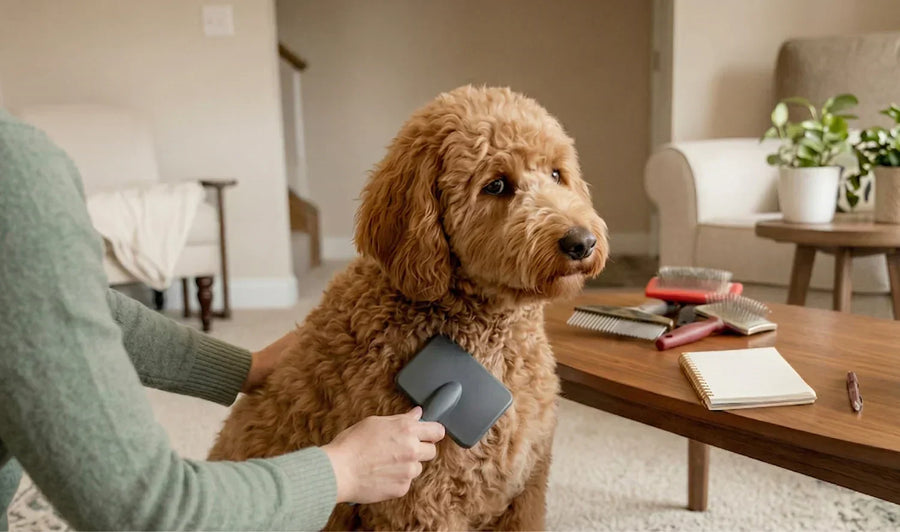

You pick up the brush. Your Doodle spots it and disappears under the table.
Or they sit still for thirty seconds, then start wriggling, snapping at the air, or giving you that look — the one that says "please, not this again."
If this sounds familiar, you're not alone. Brushing resistance is one of the most common issues Doodle owners face. And crucially — it's usually not a personality problem. It's a signal.
Here's how to understand what's behind it, and how to actually fix it.
First: Understand Why
If you've ever thought, "my doodle hates being brushed," or noticed your dog hates being brushed, there's almost always a clear cause.
Discomfort from the wrong brush or technique
Standard slickers with rigid, fixed heads catch and pull on tangles with every stroke — and non-rounded pins scratch against the skin on top of it. If brushing has ever been uncomfortable for your dog, they've remembered it. Their resistance isn't stubbornness — it's self-protection. Very often, the brush itself was the problem all along.
Mats tightening against the skin
If there are existing mats, every brush stroke tugs against the skin. The dog isn't reacting to the brush — they're reacting to the discomfort the mat causes when touched. Resolve the mat first; the brush resistance often disappears with it.
Sessions that were too long
Being held still and groomed for 30 minutes is genuinely stressful for most dogs, especially ones who haven't been trained to accept it. If early experiences were overwhelming, that association sticks.
Never being taught to accept it
Grooming tolerance is a learned behaviour, not a natural one. If a dog was never positively trained to accept brushing, resistance is the expected result — not a character flaw. That's why short, rewarding sessions from day one matter so much with a puppy.
Step 1: Start Without the Brush
If your Doodle associates the brush with bad experiences, bring it back to zero.
For a few days, don't brush at all. Simply leave the brush visible — on the sofa, near their bed, somewhere neutral. Let them sniff it. Ignore it yourself. The goal is to break the anticipatory anxiety that starts the moment they see you reach for it.
Then progress to: pick up the brush, reward your dog with a treat, put the brush back down. Don't brush yet. Just repeat this until picking up the brush predicts something good.
Step 2: Switch to a Gentler Tool
If brushing has been uncomfortable, changing the tool is often the single biggest shift you can make.
A flexible head slicker — where the head moves and absorbs resistance rather than staying rigid — transforms how brushing feels through a curly coat. Instead of a fixed head dragging on every tangle, the flexible head gives, so sessions feel closer to a massage. And rounded, polished pins mean no scratching against the skin. For a brush-sensitive dog, this change alone can transform sessions — many dogs who previously bolted at the sight of a brush tolerate a flexible head slicker from the very first session.
Try the brush on yourself first. Run it firmly across your forearm. It should not feel scratchy. If it's uncomfortable on you, it's uncomfortable on them.
Step 3: Make Sessions Shorter Than You Think Necessary
Start with 60 seconds. Genuinely — set a timer.
One minute of calm, gentle brushing, followed by a jackpot treat and your dog's favourite activity. End before your dog shows any sign of stress. The session should stop while they're still relaxed.
Over days and weeks, gradually extend. Two minutes. Three minutes. Five. The goal is to build a history of grooming ending well, repeatedly, until the anxiety simply doesn't have anything to attach to.
Step 4: Use High-Value Rewards
Regular treats may not be enough if the dog's stress is high. Use something they only get during brushing — a special chew, a piece of cooked chicken, a favourite toy they rarely see.
Some owners use a lick mat spread with peanut butter or soft cheese, placed in front of the dog during brushing. The licking behaviour is naturally calming, and the dog is positively occupied rather than waiting for the session to end.
Step 5: Check for Hidden Mats
Before every session, run your fingers through the coat — especially in the five zones where mats form fastest: behind the ears, the collar line, the legs, the tail, and the armpits. Feel for any hardness or resistance.
If you find a mat, deal with it separately and gently before brushing the rest of the coat. Never brush over a mat — work it out with your fingers and detangling spray first, in short sessions, with plenty of breaks.
A dog that appears to hate brushing generally — but only reacts in specific spots — is almost always reacting to mats in those spots, not the brush itself.
Be Patient. It Takes Time.
Rebuilding trust around grooming doesn't happen in a weekend. For dogs with a long history of stressful brushing, it can take weeks of consistent, positive, short sessions before you see a real change.
But it does change. Most Doodles can be brought from genuine brushing panic to calm tolerance — and eventually, for many, to something close to enjoyment — with the right approach and the right tools.
Final Thoughts
A Doodle that hates the brush is almost always protecting themselves from an experience that taught them to — not being intentionally difficult. Identify the cause, switch to a gentler tool if needed, shorten your sessions, and rebuild the association from the ground up. Most dogs can go from genuine brushing panic to calm tolerance with patience and the right approach. It takes time, but it absolutely works.
🎁 Explore our best-selling Doodle Brush tools
Stay Connected with Us:
👉 Follow our Doodle Brush Facebook Page for expert grooming tips, tutorials, and updates.
👉 Join The Tangle-Free Doodle Club, our private Facebook group for Doodle parents — share grooming stories, get tips, and take part in giveaways!
Related Articles
📓Why Does My Doodle Run Away From the Brush?
📓How to Make Brushing a Positive Experience for your Doodle
📓How to Get a Doodle Puppy Used to Being Brushed
Q&A |
Why does my Doodle resist brushing?It's usually a signal, not stubbornness. Common causes include discomfort from the wrong brush (rigid, fixed heads catch and pull on tangles; non-rounded pins scratch), existing mats that cause discomfort when touched, sessions that were too long and overwhelming, and simply never being taught to accept grooming. Address the cause, and the "brushing hate" usually resolves with it. What kind of brush should I use to make brushing more comfortable?Switch to a flexible head slicker with rounded, polished pins. The flexible head absorbs resistance instead of dragging on tangles — so brushing feels closer to a massage — and the rounded pins mean no scratching. Test it on your own forearm first: if it feels scratchy, it's not comfortable for your dog either. My dog hides at the sight of the brush — what's the first step?Start without brushing to reset the association. Leave the brush visible in neutral places for a few days. Then pick it up, give a treat, and set it down — no brushing yet. Repeat until the brush predicts something positive before you attempt any grooming. How long should each brushing session be, and how do I keep my dog calm?Begin with just 60 seconds of gentle brushing, then end on a high note with a jackpot reward and a favourite activity. Gradually extend to two, three, then five minutes over time, always stopping before any stress appears. Use high-value rewards — special treats, chews, or a lick mat with peanut butter or soft cheese — to keep your dog relaxed and positively engaged. What should I do about mats, especially if my dog only reacts in certain spots?Check for hidden mats before every session — especially behind the ears, along the collar line, on the legs, the tail, and in the armpits. Never brush over a mat: work it out gently with your fingers and detangling spray, taking short breaks. Dogs who "hate brushing" only in specific areas are usually reacting to discomfort from mats in those spots. Be patient — rebuilding trust can take weeks, but with the right tools and short, positive sessions, most Doodles improve dramatically. |


