
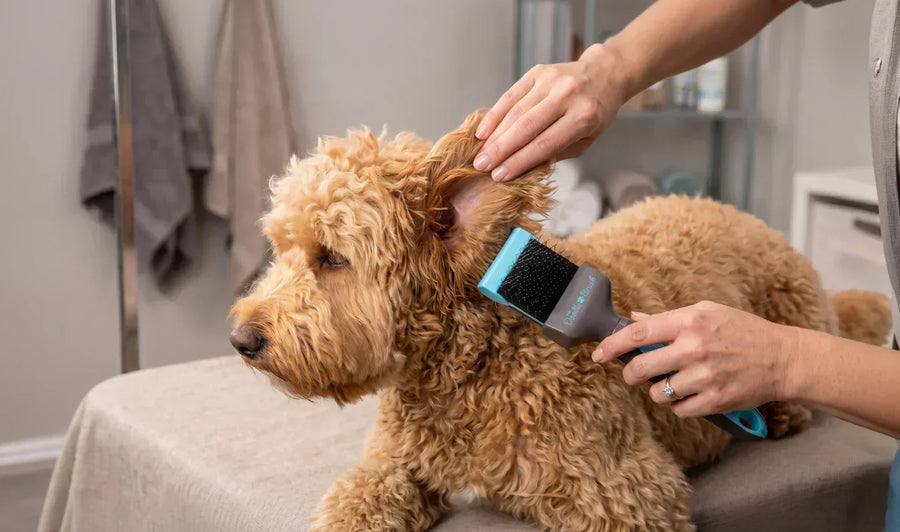

If your Doodle "looks fine" but the groomer still finds mats — it's because you're checking the wrong places.
We see this constantly. Owners who brush regularly and feel like they're doing everything right — and then the groomer says, "Sorry, this one's going to need a shave-down." It's gutting. And nine times out of ten, it could have been avoided. That's what this guide is: how to prevent matting in Doodles by checking the five zones that mat first, properly, in a couple of minutes a day.
You don't need a million tools. You need a system, and you need to check the right zones.
The One Rule That Changes Everything
Before we get into the five zones, here's the rule that anchors all of this:
If you can't see skin, you're guessing. Mats live underneath.
Whatever brush you use, this rule still applies.
Surface fluff fools almost every Doodle owner. The top layer of the coat can look perfect — soft, fluffy, fine — while the undercoat is quietly compacting into mats. The only way to know what's actually happening down there is to part the coat with your fingers and look at the skin.
That's the anchor of the whole system. Part the coat. See the skin. Then brush.
And after you brush, the comb tells the truth. If it glides through, you're done. If it snags, you go back to the brush for that section and then comb-test again. Brush, comb, repeat — that loop is the whole game.
Zone 1: Behind the Ears
Friction plus moisture equals mats. That's the formula, and behind the ears is where it shows up first.
Your Doodle scratches, shakes their head, gets a bit damp from a drink or a walk in the rain, and the fine coat tangles against itself — matted hair behind a dog's ears is the most common find at any grooming appointment. It's a daily-check zone for a reason.
How to do it: Lift the ear gently. Part the coat at the base so you can see the skin. Then take your single head flexible slicker and work in small strokes with light pressure. You're brushing through the coat, not over it.
Then the comb test. When it glides through, we're done. If it snags, go back to the brush — then comb-test again.
If your Doodle gets fidgety, pause. Give them a second. Start again. There's no rush, and forcing it just teaches them that brushing is something to dread.
Zone 2: The Armpits
This is where shave-downs are born.
The armpits are a tricky spot that lots of Doodle parents miss — partly because they're hard to see, and partly because dogs naturally pull their leg back when you try to lift it. So the coat gets compressed all day, every day, against itself, and nobody's checking.
How to do it: Gently lift the front leg. Part the coat in the armpit so you can see the skin. If you feel resistance when you start to brush, don't yank. Work gently in smaller sections. A flexible head slicker really earns its keep here because the flexible head absorbs the resistance and reaches deeper into the undercoat, so the pins don't dig in.
And of course — check with the comb when you're done.
Zone 3: The Collar (or Harness) Line
This is the number one reason our dogs don't wear a harness around the house. Harness rub turns fluff into felt.
Anything sitting against the coat — collar, harness, bandana — creates constant friction. The hair underneath gets compressed and rubbed all day, and because it's hidden under the gear, it's almost never checked.
How to do it: Slip the collar or harness off completely. Start at the base of the neck and gradually work upwards over the collar line, adding a little extra coat with each stroke. The flexible head absorbs the resistance instead of catching against the curve of the neck.
Comb check. Done.
The key difference here is depth versus pressure. You're not pressing harder — you're working layer by layer so the brush actually reaches the undercoat where mats start.
Zone 4: The Legs
Legs get tangled because they get dragged through everything. Mud, grass, water, bedding, the floor, the sofa. And the coat on the legs is usually longer and finer, so it tangles faster and dries slower.
This one's mostly Amy's department, and her phrase for it is the one to remember:
Part, brush, move up.
How to do it: Pick up the leg gently. Part the coat into a small section. Brush it through from underneath, working upwards. Check with the comb. Good to go. Then move up to the next section.
For longer or thicker leg coats, the Extra Long Pin Slicker reaches deeper into the undercoat where mats actually start — and because it clears more coat per stroke, there's less brushing to get through.
Zone 5: The Tail
Like the legs, the tail gets dragged through everything — especially if your Doodle likes to sit and wag their tail at the same time.
The base of the tail is also a compression zone from sitting and lying down, and the underside of the tail almost never gets checked because it's hidden from view.
How to do it: Hold the tail gently at the base. Brush from the body outward toward the tip in sections — three or four sections is usually about right. Don't try to brush the whole thing in one go.
The comb check is your lie detector here. If it snags, revisit that spot with the brush — then use the comb again. That's the loop.
Check these zones regularly and you'll avoid the shave-downs caused by the sneaky mats they hide.
The Daily System
Here's the actual routine.
A couple of minutes to check the five zones. A few more to brush through anything you find. Even a full five-zone brush-through rarely takes more than ten minutes on a maintained coat.
It's so much easier — and so much kinder to your Doodle — than a stressful three-hour dematting marathon the night before your grooming appointment.
And you don't even need to do every zone every day. Refine your routine. Make it work for you and your Doodle based on their coat. Some Doodles will need ears and armpits checked daily and the rest twice a week. Some will be fine with a full five-zone check every other day. You'll find the rhythm.
The four steps that repeat in every zone:
Part the coat. Brush in layers. Comb test. Done.
That's the whole system.
A Note Before You Go
If you've been missing these five high-priority zones, it doesn't mean you don't care. It doesn't mean you failed.
It means no one showed you.
Doodle coats are genuinely different from any other breed's coat, and most of the brushing advice out there was written for dogs who don't have this exact mix of length, density, and fine undercoat. The five-zone system exists because we built it for the way Doodle coats actually grow.
If this helped, save it and share it with another Doodle parent. And if you want the full start-to-finish routine, subscribe to our channel — we'll walk you through it.
A couple of minutes a day. Five zones. That's all it takes.
🎁 Explore our best-selling Doodle Brush tools
Stay Connected with Us:
👉 Follow our Doodle Brush Facebook Page for expert grooming tips, tutorials, and updates.
👉 Join The Tangle-Free Doodle Club, our private Facebook group for Doodle parents — share grooming stories, get tips, and take part in monthly giveaways!
Related Article
📓Where Mats Hide on a Doodle: The 5 Areas Every Owner Needs to Know
📓The 3 Stages of Matting (And How to Fix Each One)
📓How to Brush Your Doodle at Home: A Complete Step-by-Step Guide
Q&A |
My Doodle looks brushed — why does the groomer still find mats?Surface fluff can be misleading. The top layer may look soft and tidy while the undercoat quietly compacts into mats. The anchor rule is: if you can't see skin, you're guessing. Part the coat with your fingers so you can see the skin, brush in layers, then do a comb test. If the comb glides, you're done; if it snags, go back to the brush for that section and retest. That brush–comb loop is how you find what the eye misses. Which five zones mat first, and why those areas?These spots combine friction, moisture, compression, and longer or finer coat — perfect conditions for tangles. Behind the ears: friction and moisture from scratching, shaking, and dampness. The collar/harness line: gear rubs hair into felt and hides the trouble. The legs: longer, finer coat gets dragged through mud, grass, and bedding, and dries slowly. The tail: drags through everything, the base compresses from sitting, and the underside is rarely checked. The armpits: constant compression, hard to see, and dogs pull back when you lift the leg. How often should I brush a Doodle?At least 3 times a week for wavy coats, 4–5 times a week (ideally daily) for curly, dense coats, and daily without exception during the coat transition at around 6–12 months. On top of that, build the quick five-zone check into your day — a couple of minutes checking behind the ears, the collar line, the legs, the tail, and the armpits catches tangles while they're still a thirty-second fix. Short, frequent sessions always beat long, infrequent ones. Which tools should I use, and how much pressure is right?Use a single head flexible slicker for most zones; its flexible head absorbs the resistance so the pins don't dig in, especially in tricky spots like the armpits and along the neck. For longer or thicker leg coats, the Extra Long Pin Slicker reaches deeper and clears more coat per stroke, so there's less brushing to get through. Focus on depth, not force: work layer by layer to reach the undercoat rather than pressing harder. Finish each area with a comb test to confirm you're truly through. Do collars and harnesses cause mats? What should I change?Yes — constant friction from collars, harnesses, or bandanas turns fluff into felt along the contact line. That's why many owners avoid leaving a harness on around the house. When you brush, slip the gear off completely, then start at the base of the neck and work upward over the collar line in layers, letting the flexible head absorb the resistance along the curve of the neck. Finish with the comb test to make sure you've cleared the hidden rub zone. |


