
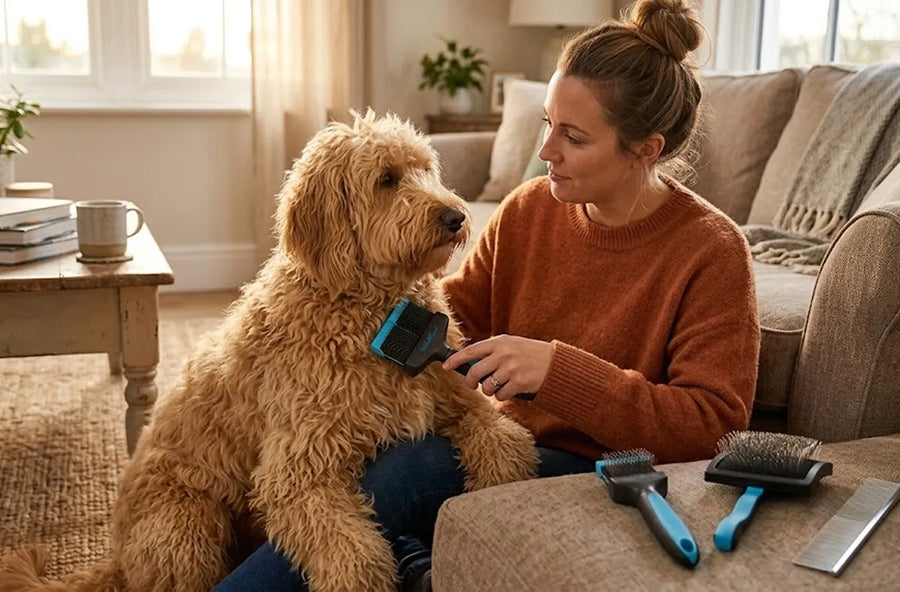

If you've looked at Doodle grooming tools and wondered about the slicker brush vs comb question — do you really need both, or does one do the job of the other — this is the guide for you.
The short answer: they do completely different things. And understanding what each one actually does is the difference between a Doodle that's genuinely tangle-free and one that looks brushed on the surface but is quietly building mats underneath.
What a Slicker Brush Does
A slicker brush is your primary grooming tool. Its job is to work through the coat — separating, detangling, and loosening any knots or mats that have formed — while also removing loose hair, debris, and dead undercoat.
A good flexible slicker does this with a flexible head that absorbs the resistance and reaches deeper into the undercoat, and polished pins that glide through curls rather than catching and dragging. Used correctly — in sections, from the skin outward — it handles the bulk of the grooming work.
The slicker brush is for:
-
Removing tangles and loose knots
-
Clearing loose hair and dead undercoat
-
Maintaining the coat between professional grooming appointments
-
Working through mat-prone areas like behind the ears, the collar line, and the armpits
The slicker brush is not for:
-
Confirming the coat is completely tangle-free
-
Detecting hidden tangles beneath the surface
-
Fine detail work in very tight or dense areas
What a Finishing Comb Does
A finishing comb is a verification tool. Its job is to confirm that the slicker brush has done its job — that the coat is genuinely tangle-free all the way down to the skin, not just tidy on the surface.
Here's the thing about slicker brushes that most owners don't realise: they can pass over a tangle without fully resolving it. The flexible head works around resistance rather than forcing through it — which is what makes them gentle and well-tolerated, but also means a small tightening knot can survive a brushing session and continue to develop underneath.
A metal finishing comb, with its firm, evenly-spaced teeth, cannot pass over a tangle. If there's a knot present, the comb stops. That resistance is your signal to go back with the slicker brush, work out the tangle, and check again with the comb.
The finishing comb is for:
-
Checking the coat after brushing to confirm it's completely tangle-free
-
Catching the hidden tangles the brush passed over
-
Fine detail work around the face, paws, and ears
-
The final step in every grooming session
The finishing comb is not for:
-
Detangling — forcing a comb through a mat causes discomfort and breaks coat
-
Replacing the slicker brush — it comes after, not instead of
Why You Need Both
This is the core of the brush vs comb for Doodles question: the two are not alternatives to each other. They're two steps in the same process.
The slicker brush does the work. The finishing comb checks the work.
Without the finishing comb, you're ending every grooming session on assumption — assuming the coat is tangle-free because it looks and feels tangle-free on the surface. But Doodle mats form from the skin out, not from the surface in. The surface can look perfect while a knot tightens underneath that will be a genuine mat in a week.
Without the slicker brush, the finishing comb has no practical purpose and will cause discomfort if used on an unprepared coat. It is not a brushing tool.
The correct sequence, every time:
-
Brush section by section with a flexible slicker, working from the skin outward
-
Run the finishing comb through each section once brushing is complete
-
Anywhere the comb meets resistance — go back with the slicker brush to clear it
-
Re-comb that section to confirm it's clear
-
Only when the comb passes through every section freely is the coat genuinely tangle-free
How Long Does This Actually Take?
For a well-maintained Doodle coat with no existing mats, the slicker brush and comb sequence for the full body takes 10–15 minutes. For a Doodle with some developing tangles, 20–25 minutes.
The most common reason grooming sessions take longer than they should is skipping the comb check and discovering a large mat at the next session that takes far longer to deal with. The two extra minutes the comb adds at the end of each session saves significantly more time over the course of the month.
What to Look for in a Finishing Comb
Not all finishing combs are created equal. For Doodle coats, look for:
-
Metal teeth — plastic combs flex and miss tangles; metal teeth are firm enough to detect them reliably
-
Dual spacing — a comb with wider-spaced teeth on one end and closer-spaced teeth on the other gives you versatility for both body coat and detail areas
-
Rounded tooth tips — for comfortable contact with the skin in sensitive areas
-
Comfortable handle — you'll be running this through the full coat at the end of every session
A Quick Reference
Use the slicker brush when:
-
Brushing the coat (the main grooming session)
-
Working through a developing tangle
-
Clearing the mat hotspot zones
Use the finishing comb when:
-
Checking the coat after brushing
-
Working detail areas around the face and paws
-
Confirming the coat is genuinely clear before ending the session
Use both together when:
-
Running a complete grooming session from start to finish
-
You want to be certain the coat is tangle-free before a grooming appointment
-
You're doing a thorough check of the mat hotspot zones
Final Thoughts
The slicker brush and the finishing comb work together — one does the job, the other confirms it's been done properly. Using both in the right sequence is what separates a grooming routine that genuinely keeps mats at bay from one that looks thorough but misses the tangles forming underneath. If you've only been using a brush, adding a finishing comb to the end of every session is the single easiest upgrade you can make to your grooming routine.
🎁 Explore our best-selling Doodle Brush tools — essential doodle grooming tools
Stay Connected with Us:
👉 Follow our Doodle Brush Facebook Page for expert grooming tips, tutorials, and updates.
👉 Join The Tangle-Free Doodle Club, our private Facebook group for Doodle parents — share grooming stories, get tips, and take part in giveaways!
Related Articles
📓How to Comb Doodle Hair: A Step-by-Step Guide
📓The Complete Guide to Doodle Grooming Tools (And What You Actually Need)
📓What to Look for in a Slicker Brush for Doodles
Q&A |
Do I really need both a slicker brush and a finishing comb?Yes. The slicker brush does the work of separating and detangling the coat while removing loose hair and debris; the finishing comb verifies that work. Slickers can glide over small knots without fully clearing them, but a metal finishing comb will stop at any hidden tangle so you can go back with the slicker and resolve it. Without the comb you’re assuming the coat is clear; without the brush the comb is uncomfortable and ineffective. How do I use a slicker brush correctly without causing discomfort?Work in sections from the skin outward using a flexible slicker with polished pins that glide through curls. Let the flexible head absorb the resistance and reach deeper into the undercoat, focusing on mat-prone spots like armpits, behind the ears, and the collar line. The slicker is for detangling and maintenance—not for confirming the coat is fully tangle-free. What should I do if the finishing comb catches or won’t pass through?Don’t force it. A snag means there’s a tangle the slicker didn’t fully clear. Go back to that spot with the slicker, work out the knot, then re-check with the comb. Repeat until the comb passes freely; forcing a comb through can cause discomfort and break the coat. How long should a full grooming session take with both tools?For a well-maintained coat, plan 10–15 minutes; with some developing tangles, 20–25 minutes. Skipping the comb often leads to bigger mats that take much longer later, whereas the comb adds roughly 2 minutes and prevents time-consuming problems—this applies to longer, fluffy poodle-style coats too. What should I look for in a finishing comb for a Doodle coat?Choose a metal comb (plastic flexes and misses tangles) with dual spacing for versatility, rounded tooth tips for comfort, and a handle that’s comfortable to hold. These features help the comb reliably detect hidden knots and make the final check quick and comfortable. |


