
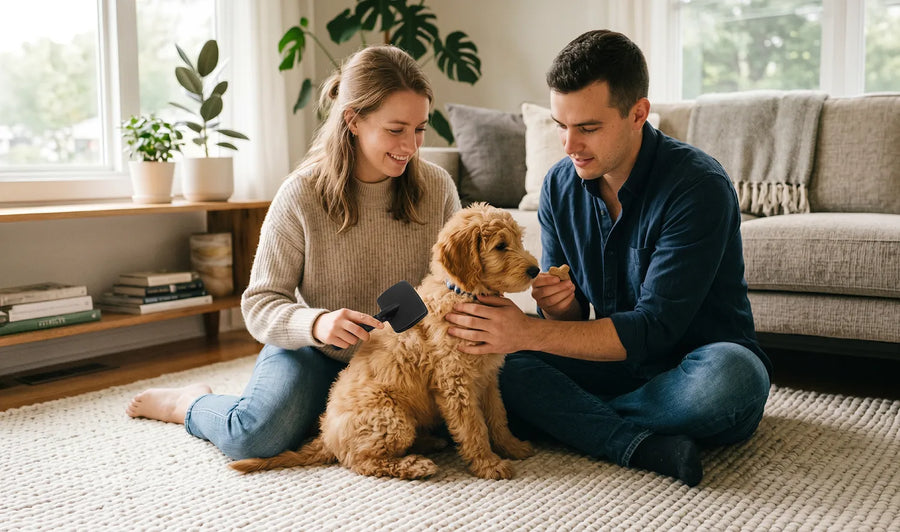

The first few months with a Doodle puppy are the most important grooming months you'll ever have — even though the coat barely needs brushing yet.
What you do now sets the template for every grooming session for the next 10–15 years. A puppy that learns brushing is calm, safe, and rewarding will be an easy dog to groom for life. A puppy whose first grooming experiences were stressful, uncomfortable, or forced will resist brushing for years — sometimes forever.
Here's how to get a puppy used to being brushed the right way — starting from day one.
Why Puppies Resist (And Why It Matters)
Puppies don't instinctively enjoy being held still and touched all over their body. It's not natural to them. A puppy that wriggles, mouths the brush, or tries to escape isn't being difficult — they're being a puppy.
The problem is when owners respond to this by holding the puppy more firmly and pushing through. The puppy learns: when the brush comes out, something stressful happens that I can't escape. That association can last years.
The goal in the first few months isn't to brush the coat. It's to make the puppy feel safe around the brush.
Week 1–2: Introduce the Brush as a Non-Event
Before you brush a single stroke, spend a few days simply letting your puppy get comfortable with the brush existing near them.
-
Place the brush on the floor near your puppy's bed or favourite spot. Let them sniff it and investigate it freely. No reaction from you — it's just a thing that's there.
-
Pick the brush up during cuddle time. Let your puppy sniff it while you stroke them with your other hand. Don't touch them with it yet.
-
Touch the brush gently to different parts of their body — back, side, chest — while giving treats. Three seconds of contact, treat, done. End while they're calm.
Week 3–4: First Brushing Strokes
Once your puppy is comfortable with the slicker brush making contact, introduce actual brushing strokes — extremely gentle, extremely brief.
-
One or two strokes down the back. Treat. Praise. Done.
-
Build up to five strokes across three or four different areas.
-
Keep total session time under two minutes.
-
Always end while your puppy is still calm — not when they've reached their limit.
The treat should come after the stroke, not during it. You're rewarding the puppy for tolerating the brushing, not distracting them from it.
The Areas to Introduce Early
These are the five zones that need the most brushing attention throughout your dog's life — the spots where mats form fastest. Introducing them early means they won't become sensitive no-go zones later:
-
Behind the ears
-
The collar line
-
The legs and paws
-
The tail (including the base and bum area)
-
The armpits (lift the leg gently from the start)
Puppies that grow up having these areas touched regularly accept it as completely normal. Puppies that never have these areas handled become adults that flinch, snap, or flee when the brush approaches anything other than the top of their back.
Use the Right Brush From Day One
The brush you start with matters enormously. A brush that scratches or drags will create negative associations very quickly, even with the best technique and plenty of treats.
For puppies, a flexible head slicker brush with rounded, polished pins is ideal. The flexible head absorbs resistance instead of dragging — so those first strokes feel closer to a stroke of the hand than a grooming tool — and the rounded pins mean no scratching against the skin, so the experience stays positive. Which is the whole point. The Single-Head Flexible Slicker is the natural starting brush: its smaller head gives you control on a small, wriggly body.
Browse The Doodle Brush range: https://www.thedoodlebrush.com/collections/the-doodle-brush-products
What to Do If Your Puppy Gets Upset
Stop. Don't push through.
If your puppy is showing signs of stress — trembling, hard panting, trying to escape, mouthing the brush hard — the session has gone on too long or moved too fast. End it calmly, give a treat anyway, and make a note to start shorter next time.
One bad session can set you back weeks. One hundred short, calm, rewarding sessions build a dog that walks over and sits down when it sees the brush come out.
That second dog is entirely possible. And it starts in the first few months.
The Long View
A Doodle that accepts grooming calmly is one of the best gifts you can give yourself as an owner — and one of the best gifts you can give your dog. It makes vet checks easier, professional grooming appointments calmer, and life generally less stressful for everyone.
Final Thoughts
The work you put in during the first few months pays back every single week for the next decade. A puppy that learns brushing is calm, safe, and rewarding becomes a dog that's easy and enjoyable to groom for life. Start gentle, stay consistent, and make every session end on a positive note. That's the whole method — and it works every time.
🎁 Explore our best-selling Doodle Brush tools
Stay Connected with Us:
👉 Follow our Doodle Brush Facebook Page for expert grooming tips, tutorials, and updates.
👉 Join The Tangle-Free Doodle Club, our private Facebook group for Doodle parents — share grooming stories, get tips, and take part in giveaways!
Related Articles
📓How to Make Brushing a Positive Experience for your Doodle
📓My Doodle Hates Being Brushed — What to Do
📓How to Brush Your Doodle at Home: A Complete Step-by-Step Guide
Q&A |
When should I start brushing a Doodle puppy — and why so early if the coat barely needs it?Because you're building lifelong associations, not managing tangles yet. Early sessions teach your puppy that brushing is calm, safe, and rewarding. If the first experiences are stressful or forced, dogs can resist grooming for years. Getting it right now sets the template for every session over the next 10–15 years. How should I introduce the brush in weeks 1–2?Make the brush a non-event and pair it with calm, brief contact. Place the brush near your puppy's bed so they can investigate it freely. During cuddle time, hold the brush while petting with your other hand. Then touch the brush lightly to different body areas for about three seconds, give a treat, and end the session while your puppy is calm. When do I start actual brushing, and how should I reward?In weeks 3–4, begin with extremely gentle, very short strokes and reward after each mini effort. Do one or two strokes down the back, then treat and praise. Build to five strokes across three or four areas, keep total time under two minutes, and always finish before your puppy reaches their limit. Give the treat after the stroke to reward tolerating the brush rather than distracting during it. Which areas should I introduce early, and what brush should I use?Start with the five zones that mat fastest: behind the ears, the collar line, the legs and paws, the tail, and the armpits (lifting the leg softly from the start). Use a flexible head slicker brush with rounded, polished pins — the flexible head absorbs resistance and the rounded pins mean no scratching, so early sessions stay positive. The Single-Head Flexible Slicker suits a puppy's small body best. What should I do if my puppy gets upset during brushing?Stop immediately and make the next session shorter and easier. Signs like trembling, hard panting, trying to escape, or hard mouthing mean you've gone too long or too fast. End calmly, still give a treat, and reset your plan to briefer, more positive sessions. One bad session can set you back weeks; many short, calm, rewarding sessions create a dog that happily approaches the brush. |


